
Capstone Workshop

The capstone course brings together the knowledge and theories that students have gained in the classroom and provides them with the opportunity to work with outside clients, collaboratively crafting practical solutions to critical problems. 

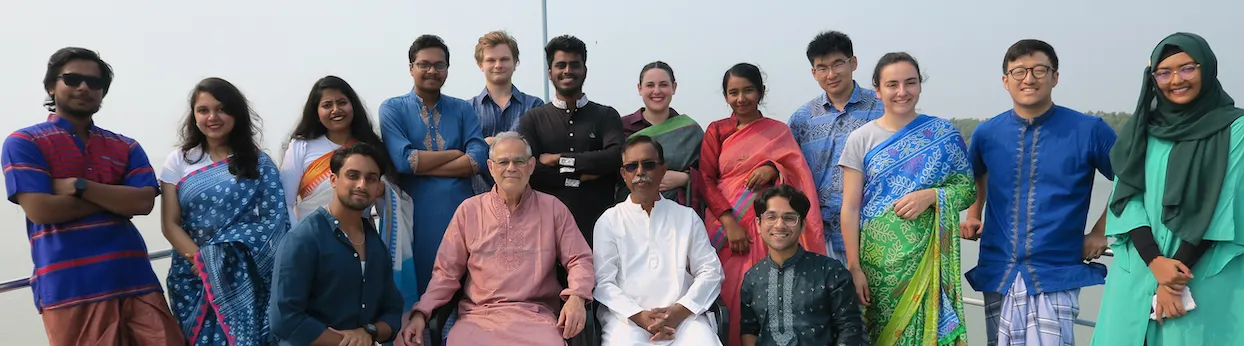
Students are required to take this course in their senior year and have worked on projects that include: collecting data on rainfall runoff to explore options for property owners to decrease the volume of storm water run-off with the Natural Resources Defense Council; creating an course curriculum on climate change for the Urban Park Rangers to promote the Natural Classroom program in New York City; and helping the Population Council to expand their research scope to include events related to climate change flooding, and more specifically the impact of flooding on women in Bangladesh. Additional clients include the Mayor’s Office of Sustainability, Nature Conservancy, NYC Park Rangers Program and New Canaan Nature Preserve.

Learn more about recent projects below: 

Students Address Real-World Sustainability Challenges in Capstone Workshop Briefings

Sustainable Development Students Tackle Four Real-World Challenges in Fall 2020 Workshop

Sustainable Development Students Address Real-World Sustainability Challenges in Workshop Briefings

The upper level undergraduate Sustainable Development Workshop is modeled on client based graduate-level workshops, but with more time devoted to methods of applied policy analysis and issues in Sustainable Development. The heart of the course is the group project on an issue of sustainable development with a faculty advisor providing guidance and ultimately grading student performance. Students receive instruction on methodology, group work, communication and the context of policy analysis. Much of the reading in the course is  project-specific and identified by the student research teams. The course is located in New York City and offered in Fall and Spring.

This course explores the interaction of riverine processes, water and hydrology, sedimentary processes, tectonics, land subsidence and sea level rise, environmental issues, cultural setting, and sustainable development in the world’s largest delta. The course explores both the hazards and resources for life in this dynamic environment through lectures, a field trip to Bangladesh during Spring Break and guest lecturers in earth and social sciences. During the field trip students are joined by Dhaka University professors and students, providing experience in cross-cultural collaboration, as well as translators to interviews and discussions with Bangladeshis. By the end of the course, students develop a quantitative understanding of the multiple earth sciences issues. It also provides a perspective on the mixture of competing earth science, social, historical and political issues that must be addressed in order to effectively address environmental issues. The course is offered in the Spring only. Read more about this course on Vergil.

*Priority will go to juniors and seniors in the Sustainable Development program.*

This course is a client-based workshop in which students apply their experience and knowledge to address critical, real-world sustainability challenges. The primary client is Wild Tomorrow, a non-profit conservation organization focused on ecosystem restoration and community development in a biodiversity hotspot in KwaZulu-Natal, South Africa. Students will contribute to the sustainable protection, rewilding, and expansion of a 4,600-acre wildlife corridor adjacent to the UNESCO World Heritage iSimangaliso Wetland Park. Over spring break, students will travel to the Greater Ukuwela Nature Reserve to learn from local experts while gaining practical experience in restoring habitat for threatened species, addressing human-wildlife conflict, and exploring the intersection of conservation and community development. Post-trip class sessions will consist of focused teamwork on the final report and presentations. The course is offered in the Spring only. Read more about this course on Vergil.

*Priority will go to juniors and seniors in the Sustainable Development program.*

This travel course gives students the opportunity to explore what sustainable development means in the context of Sub-Saharan Africa. The course is organized around two projects that students tackle in teams. Ahead of traveling to Rwanda, three main activities structure the course. First, students learn about colonial history and current sustainable development efforts in Sub-Saharan Africa. Second, they get into teams to pursue preliminary research on one of two projects. Third, they are paired with an undergraduate student at the University of Rwanda and begin regular correspondence using WhatsApp. The travel week is held over spring break, students are based in the capital city Kigali, with some in-country travel to explore beyond the urban core. Students work in teams alongside their University of Rwanda peers to advance the goals of their project. Upon return to the U.S., the final weeks of the class are devoted to team work, as students complete their projects for the final presentation. The course is offered in the Spring only. Read more about this course on Vergil.

*Priority will go to juniors and seniors in the Sustainable Development program.*

For their senior capstone project "Sustainable Development in Sub-Saharan Africa" at Columbia University, students travel to Rwanda during spring break. 

In 2023, Ryan Kalugdan and his group went with the mission to help the e-waste recycling company EnviroServe build partnerships and develop a communications program with local universities to grow awareness among faculty, staff, and students. His team also collaborated with a handful of students from the University of Rwanda, College of Science and Technology. In this cross-cultural experience, students also went on a safari through Akagera National Park and toured the city of Kigali.